Why KL is underrated
Kuala Lumpur consistently gets skipped in favor of Thailand or Bali, and the nomads who actually move there tend to wonder why they waited. English is an official working language — you can live your entire life in KL without learning a word of Malay. Banks, hospitals, government offices, supermarkets: all English.
Infrastructure is Singapore-tier. The MRT connects most areas. Fiber internet at 500 Mbps for $30–50/month is standard. Private hospitals with English-speaking doctors are everywhere and affordable.
The cost is Southeast Asian. A comfortable life in KL runs $1,200–2,000/month. Singapore with equivalent infrastructure costs $4,000+.
Neighborhoods
Mont Kiara is expat central — a self-contained enclave northwest of downtown packed with international schools, Western supermarkets (Jaya Grocer, Village Grocer), English-speaking clinics, and condo towers. Rent 1BR: $900–1,200/month. Best for families and people who want maximum English-speaking infrastructure. Can feel insular.
Bangsar is the hip alternative — restaurants, wine bars, weekend market, walkable streets (rare in KL). 1BR: $600–900/month. Better balance of expat amenities and local character. Preferred by younger nomads and couples without kids.
Bukit Bintang is the shopping and entertainment district — Pavilion mall, Jalan Alor street food, rooftop bars. Central but noisy. Studio/1BR: $700–1,000/month. Good if you want to be in the middle of everything.
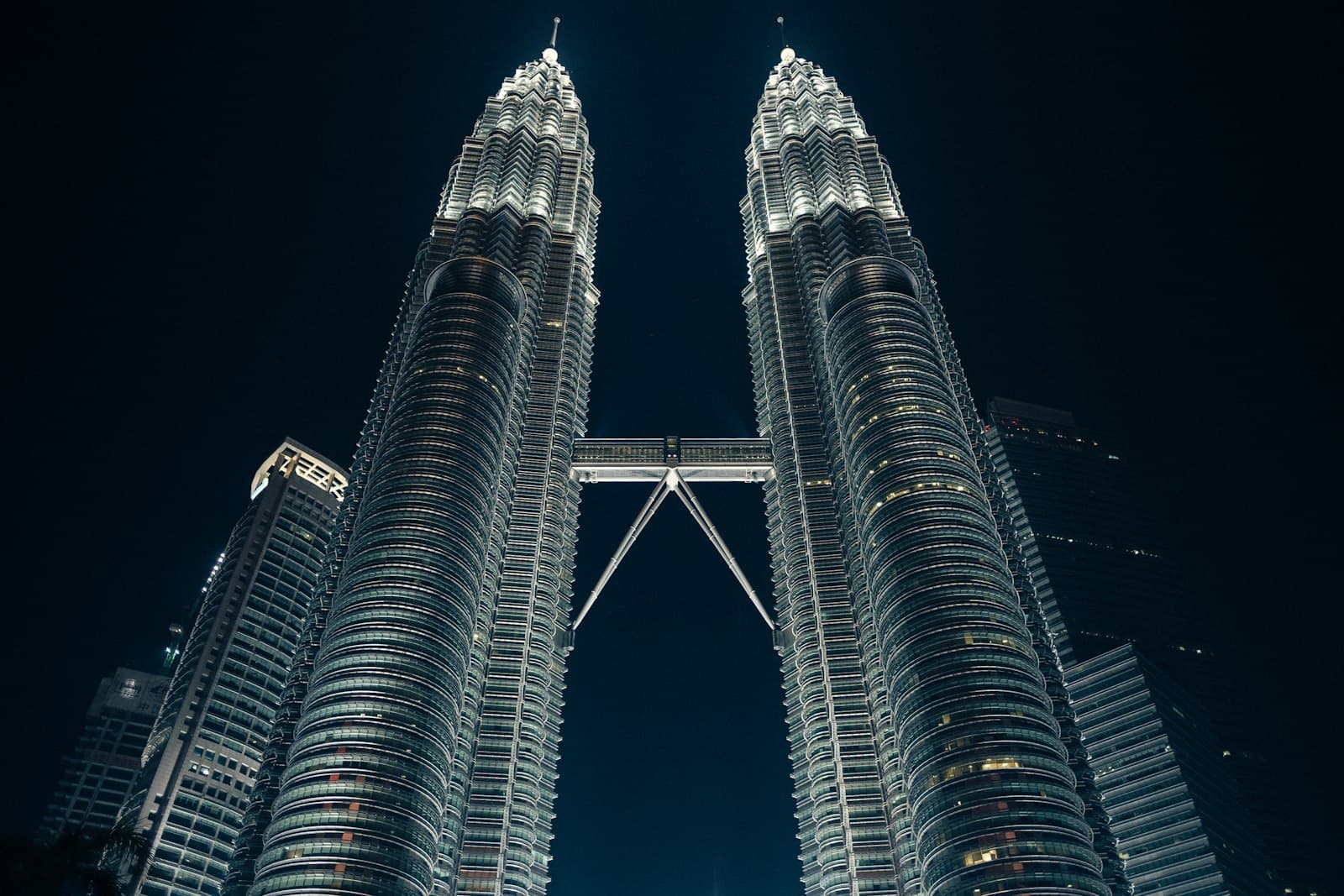
KLCC (around the Petronas Towers) is the financial district, high-end, expensive. 1BR: $1,000+/month. For people on corporate expense accounts.
Real costs (2026)
Single person, comfortable in KL:
- Rent (1BR, Bangsar or Mont Kiara): $600–1,200/month
- Utilities + internet 500 Mbps fiber: $80–130/month
- Food (hawker center + occasional restaurant): $250–400/month
- Transport (Grab + MRT): $60–120/month
- Total: $1,200–2,000/month
Hawker center breakfast (nasi lemak or roti canai with teh tarik): $2–3. Lunch at a mamak stall: $3–5. Dinner at a mid-range restaurant: $10–20/person.
Healthcare: private GP consultation $25–50. Private specialist $50–100. KL has internationally accredited private hospitals — Gleneagles, Pantai, Sunway Medical.
DE Rantau — the visa that makes sense here
The DE Rantau Nomad Pass lets you live legally in Malaysia for 12 months, renewable for another 12 (24 months total). Income requirement for digital/IT work: $24,000 USD/year — far lower than Indonesia's $60,000.
Apply at derantau.mdec.com.my. Fully online process, no consulate visit. Processing: 2–4 weeks. Fee: approximately $225 for the main applicant, $110 per dependent.
You cannot work for Malaysian companies or earn Malaysian-sourced income on this pass. Foreign income only.
After 24 months you can apply again — the program does not currently have a hard lifetime limit.
What people get wrong about KL
— "It is too hot." Yes, it is equatorial. 28–33°C year-round with humidity. But every building has AC and most places you spend time are air-conditioned. Outdoors is the challenge, not indoors.
— "There is nothing to do." This is wrong and usually said by people who stayed in the tourist zone. KL has a genuinely good food scene (arguably the best in the region), art galleries, live music, hiking trails 30 minutes from downtown (Bukit Tabur, FRIM).
— "I need a car." Not in Bangsar or KLCC. The MRT expansion has made central KL increasingly walkable between stations. Grab fills the gaps cheaply.
— Air quality: KL occasionally has haze from Indonesian forest fires (typically August–October). Not as severe as Chiang Mai smoke season but worth monitoring.