The short version
Canggu: social, expensive, surfy, noisy. Ubud: quiet, cheaper, focused, no beach. Sanur: calm, stable, family. Uluwatu: best waves, isolated, impractical for full-time work.
None is objectively better. They attract different people. Read through and pick the one that matches what you actually want from Bali, not what Instagram says Bali is.
Canggu — the nomad poster child
Canggu is where the largest concentration of remote workers live. The strip around Jl. Batu Bolong has coworking spaces, vegan cafes, CrossFit boxes, rooftop bars, and surf schools within walking distance.
Rent 2026: 1BR villa with pool at 12–18 million rupiah/month ($750–1,100). Shared co-living room from 5 million ($310). Prices rose sharply post-2023 and have not come back down.
Internet: 50–100 Mbps fiber in most places. Reliable enough for video calls. Dojo Bali coworking: 1.8 million rupiah/month (~$110).
The problem: traffic. 4–7 PM on Jl. Batu Bolong and Jl. Pantai Berawa is gridlocked. Do not try to cross town on a scooter during this window. Also the "Canggu bubble" — you can spend months here and barely interact with actual Indonesian culture.
Best for: people who want an active social life, surfing, and maximum nomad infrastructure.
Ubud — the quiet alternative
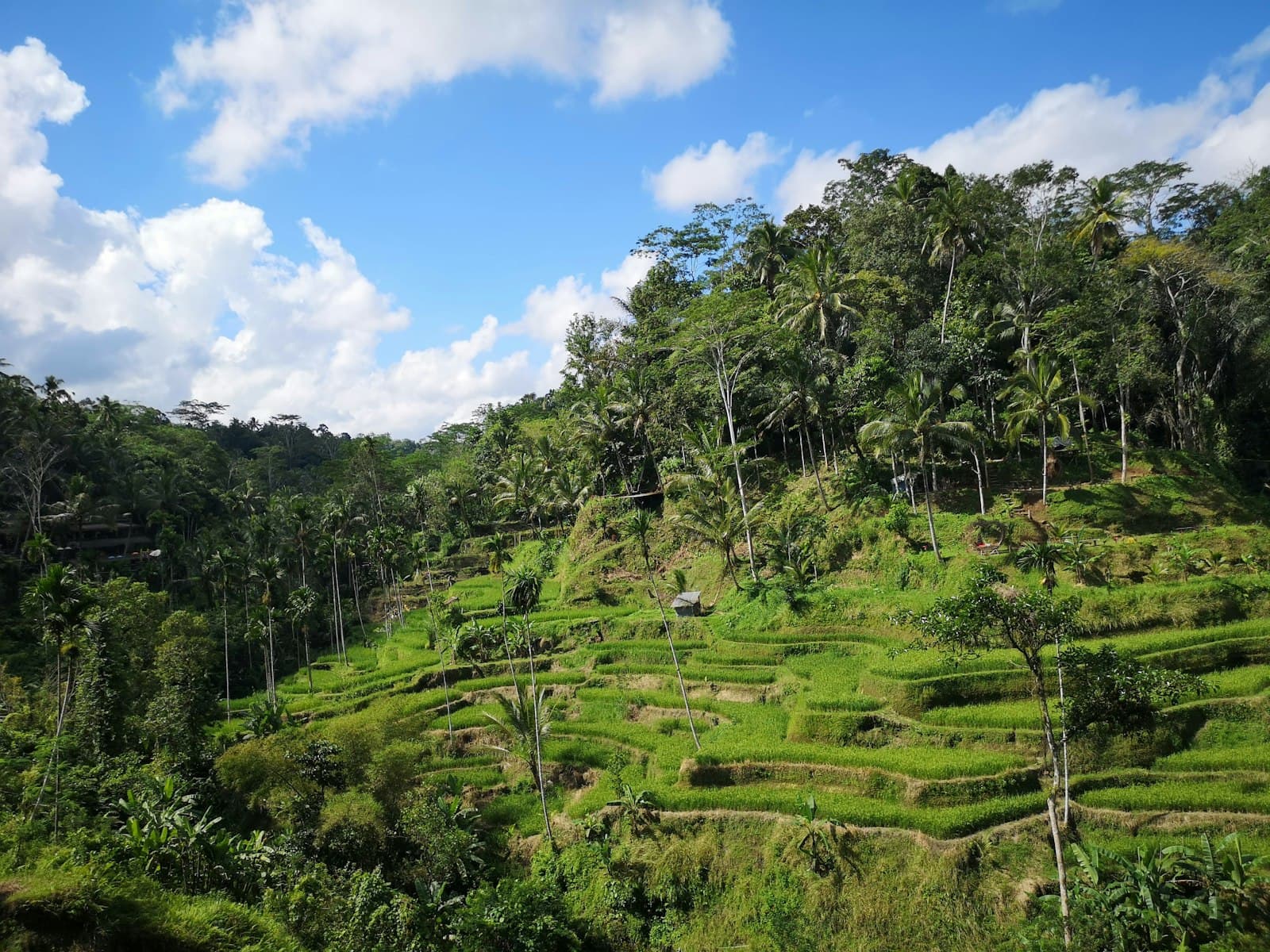
Ubud is the cultural heart of Bali. Rice paddies, monkey forests, traditional ceremonies, yoga studios every 50 meters. No beach.
Rent: 8–14 million rupiah/month ($500–875) for similar square footage to Canggu — 20–30% cheaper. Internet averages 20–60 Mbps, lower than Canggu but sufficient for standard remote work.
Outpost Ubud coworking: 2 million rupiah/month ($125), includes community dinners and yoga. Hubud is the other anchor space.
The trade-off: to get to a beach you need 1.5–2 hours. If you need beach access regularly, Ubud is the wrong base. If you need to actually focus and get work done without constant social distraction, Ubud is dramatically better.
Best for: freelancers who need deep work time, people into wellness/yoga, those who want lower costs with a cultural experience.
Sanur — the underrated long-stayer
Sanur gets less hype than Canggu or Ubud but consistently ranks high among people who actually stay in Bali for 6+ months. Calmer beach, established infrastructure, a mix of retirees and families alongside younger nomads.
Rents are between Ubud and Canggu. Internet is reliable — often fiber from PLN or Biznet. Less traffic than Canggu.
Best for: people past the "first Bali trip" phase who want to settle, couples, and anyone who values routine and stability over scene.
Uluwatu — the surf decision
Uluwatu has the best waves in Bali. It also has the most dramatic cliffs, sunset spots, and the kind of views that end up in travel magazines.
The practical reality: it is isolated. The nearest proper supermarket is a 30-minute drive. Getting to Canggu or the airport takes 45–75 minutes. Most food options are tourist-price restaurants.
If surfing is the primary reason you are in Bali and you are okay with limited infrastructure and higher food costs, Uluwatu makes sense. For working nomads without surfing as a priority, it does not.
Monthly costs across areas (2026)
Rough monthly budgets for a single person:
Canggu: $1,500–3,000 Ubud: $900–1,800 Sanur: $1,100–2,200 Uluwatu: $1,200–2,500 (lower rent, higher food/transport costs)
Most nomads actually spend $900–1,500/month if they avoid the premium beach clubs and Western-price restaurants. Eating at warungs (local restaurants) keeps food at $2–4 per meal.